Performed by Dr. Sriharsha Gurram at Dr Sriharsha Gurram
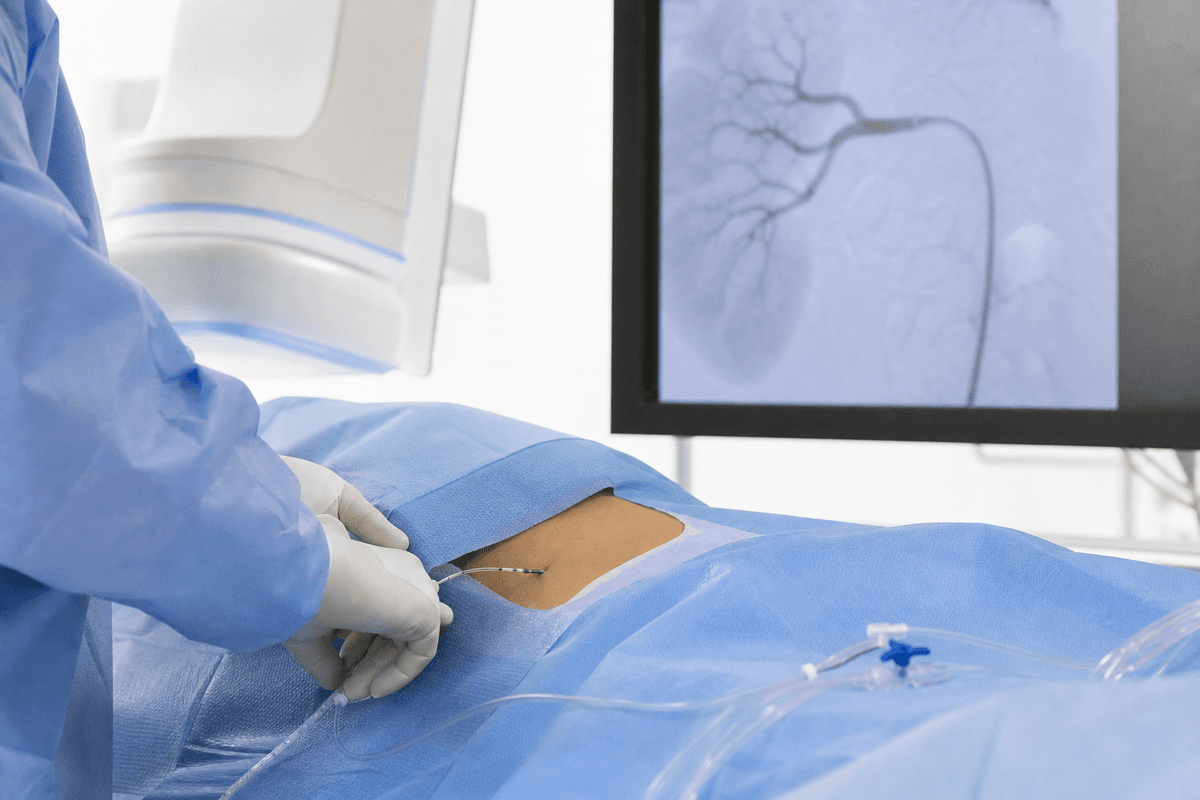
Renal Angioplasty & Stenting in Bengaluru is a minimally invasive procedure to open blocked or narrowed renal arteries, restoring proper blood flow to the kidneys. This advanced technique treats renal artery stenosis, helping control blood pressure and preserve kidney function. Dr Sriharsha Gurram specializes in this nephrology procedure, offering patients comprehensive care with cutting-edge interventional techniques.
We believe in honest, upfront disclosure so you can make an informed decision.
A step-by-step look at what happens during this procedure.
A small incision is made in the groin or wrist area, and a catheter is inserted into the femoral or radial artery under local anesthesia with sedation.
Using fluoroscopic guidance, the catheter is carefully advanced through the arterial system until it reaches the renal arteries near the kidneys.
Contrast dye is injected through the catheter while X-ray images are taken to visualize the exact location and severity of the arterial narrowing or blockage.
A specialized balloon catheter is positioned at the narrowed segment and inflated to compress the plaque against the artery wall, widening the vessel lumen.
A small mesh tube (stent) is deployed at the treated site to keep the artery open, ensure sustained blood flow, and prevent the vessel from narrowing again.
A structured, patient-first approach from first consultation to full recovery.
Dr Sriharsha Gurram conducts thorough imaging studies including renal duplex ultrasound, CT angiography, or MR angiography to precisely evaluate the extent of renal artery stenosis and plan the optimal approach.
Each patient receives an individualized treatment strategy based on their specific anatomy, degree of stenosis, kidney function, and overall cardiovascular health to maximize procedural success.
Dr Gurram utilizes state-of-the-art fluoroscopic equipment and the latest generation drug-eluting or bare-metal stents, employing meticulous technique to ensure precise placement and optimal vessel expansion.
Patients are closely monitored for blood pressure control, kidney function improvement, and stent patency through scheduled follow-up visits, imaging studies, and medication optimization under Dr Gurram's expert nephrology care.
What to expect at each stage of your recovery journey.
Patients remain on bed rest for 4-6 hours with the access site monitored for bleeding. Vital signs and urine output are closely tracked. Most patients stay overnight for observation of kidney function and blood pressure.
Gradual return to normal activities with avoidance of heavy lifting or strenuous exercise. Access site care is important to prevent infection. Blood pressure and kidney function are monitored through laboratory tests and home measurements.
Complete healing of the access site occurs. Patients resume all normal activities including exercise. Blood pressure medications are adjusted based on response to treatment. Follow-up imaging confirms stent patency and improved renal perfusion.
Most patients experience significant reduction in blood pressure, with many achieving better control on fewer antihypertensive medications or lower doses after successful renal artery revascularization.
The procedure can stabilize or improve kidney function in selected patients, particularly those with recent decline in renal function attributed to hemodynamically significant renal artery stenosis.
By improving blood flow to the kidneys and achieving better blood pressure control, patients may experience reduced risk of heart failure, stroke, and other cardiovascular complications associated with resistant hypertension.
Patients often report improved energy levels, better tolerance of daily activities, and reduced medication burden, contributing to overall enhanced wellbeing and quality of life after successful intervention.
Let's clear up some of the most common myths about renal angioplasty & stenting.
Get a personalised assessment from an experienced specialist. Understand your options, ask your questions, and decide with confidence.
Consult Sriharsha Gurram for Renal Angioplasty & Stenting at any of these 2 centres — pick the one nearest you.