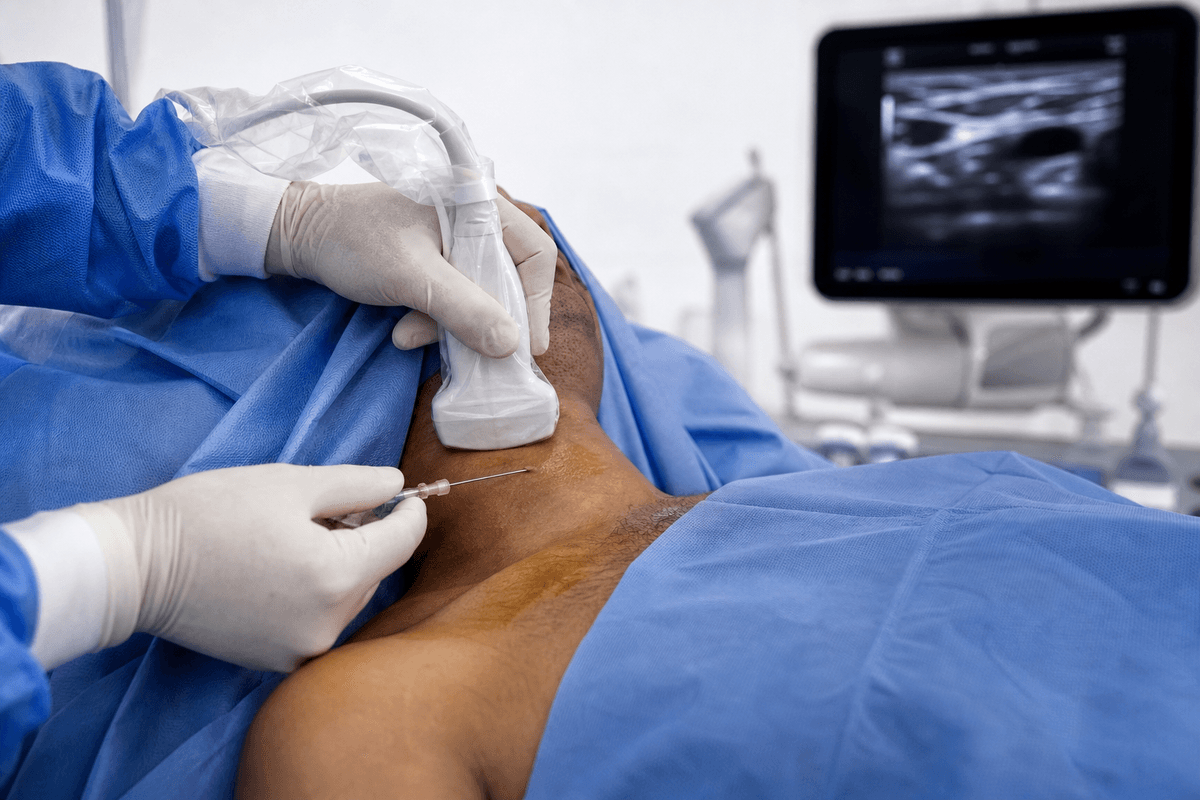
Performed by Dr. Sriharsha Gurram at Dr Sriharsha Gurram
Central Line Insertion in Bengaluru is a specialized procedure performed by Dr Sriharsha Gurram to establish reliable venous access for dialysis, medication administration, and fluid management in patients with kidney disease. This minimally invasive technique involves placing a catheter into a large vein, typically in the neck, chest, or groin, ensuring optimal treatment delivery for both acute and chronic renal conditions. Dr Sriharsha Gurram brings extensive nephrology expertise to ensure safe and effective central line placement.
We believe in honest, upfront disclosure so you can make an informed decision.
A step-by-step look at what happens during this procedure.
The patient is positioned lying down with the selected vein area exposed. The neck, chest, or groin area is cleaned and draped in a sterile manner to minimize infection risk.
Local anaesthetic is administered at the insertion site to numb the area. This ensures patient comfort throughout the procedure while maintaining consciousness.
Real-time ultrasound imaging is used to visualize the target vein and guide needle placement. This modern technique significantly improves accuracy and reduces complications.
A guidewire is inserted through the needle into the vein, followed by the catheter which is carefully threaded over the wire. The catheter position is confirmed using fluoroscopy or chest X-ray.
The catheter is secured to the skin with sutures and a sterile dressing is applied. The line is flushed and tested to ensure proper function and blood flow before use.
A structured, patient-first approach from first consultation to full recovery.
Dr Sriharsha Gurram conducts thorough evaluation of your medical history, current medications, and coagulation status. Ultrasound assessment identifies the optimal vein for insertion, ensuring a personalized approach tailored to your specific renal condition.
Using advanced ultrasound guidance throughout the procedure, Dr Gurram ensures accurate vessel identification and catheter placement. This modern approach significantly reduces complications and enhances patient safety with real-time visualization.
Dr Gurram follows strict sterile techniques with maximum barrier precautions including sterile gown, gloves, and full drape coverage. Chlorhexidine skin preparation and meticulous aseptic handling minimize infection risks associated with central venous access.
After catheter placement, Dr Gurram ensures proper position confirmation through imaging and provides detailed catheter care instructions. Regular follow-up monitors for complications and ensures optimal function throughout the treatment duration.
What to expect at each stage of your recovery journey.
Patients rest for 1-2 hours with monitoring of vital signs and insertion site. The catheter is checked for proper function and any immediate complications such as bleeding or difficulty breathing are assessed before discharge.
Keep the insertion site clean and dry with the sterile dressing intact. Avoid strenuous activities and heavy lifting. Watch for signs of infection including fever, redness, swelling, or discharge from the site.
Follow strict catheter care protocols including regular dressing changes, hand hygiene before touching the line, and flushing as directed. Attend all scheduled appointments for monitoring and report any concerns immediately to ensure long-term catheter function.
The central line provides immediate, reliable venous access for hemodialysis, medication administration, and fluid management. Patients can begin necessary treatments without delay, particularly critical for those with acute kidney injury or urgent dialysis requirements.
Central venous catheters allow for high-flow hemodialysis, administration of concentrated medications, and total parenteral nutrition that cannot be delivered through peripheral veins. This ensures optimal therapeutic outcomes for complex renal conditions.
By utilizing large central veins, the procedure preserves peripheral veins for future use and prevents damage from repeated needle sticks. This is especially beneficial for patients requiring long-term vascular access or awaiting permanent access creation.
For chronic kidney disease patients, central lines serve as a temporary solution while permanent vascular access such as arteriovenous fistula matures. This ensures continuous dialysis capability during the transition period.
Let's clear up some of the most common myths about central line insertion.
Get a personalised assessment from an experienced specialist. Understand your options, ask your questions, and decide with confidence.
Consult Sriharsha Gurram for Central Line Insertion at any of these 2 centres — pick the one nearest you.