Treated by Dr. Sriharsha Gurram at Dr Sriharsha Gurram
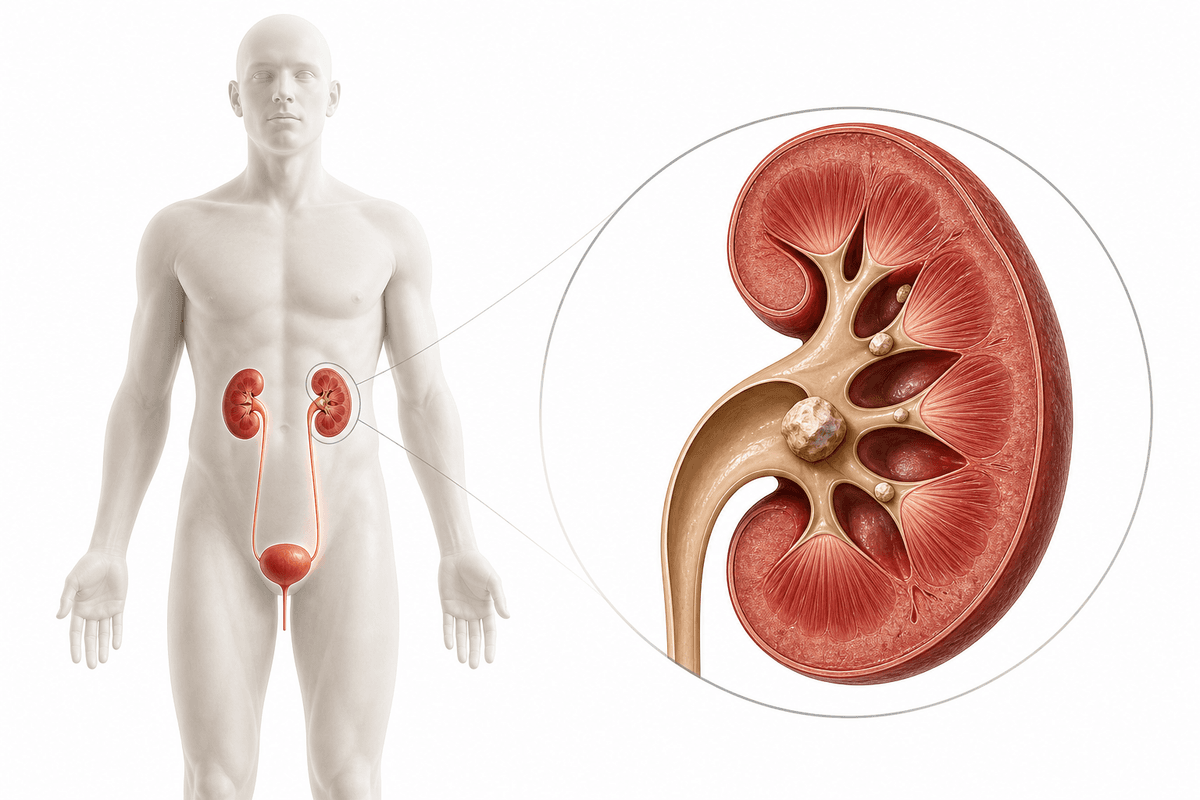
Kidney stones are hard mineral and salt deposits that form inside the kidneys, affecting thousands of patients in Bengaluru annually. These crystalline structures can cause severe pain and urinary complications when they move through the urinary tract. Dr Sriharsha Gurram provides comprehensive nephrology care for kidney stone prevention, diagnosis, and treatment at his Bengaluru clinic.
The most common type, accounting for approximately 80% of all kidney stones. These form when calcium combines with oxalate or phosphate in the urine, creating hard crystalline deposits that can vary in size from tiny grains to large obstructive masses.
Develop when urine becomes too acidic, often associated with high protein diets, gout, or certain genetic factors. These stones are unique because they can sometimes be dissolved with medication rather than requiring surgical intervention.
Form in response to urinary tract infections and can grow rapidly to become quite large, sometimes filling the entire kidney collecting system. These stones are more common in women and require both stone removal and infection treatment.
Multiple factors can contribute to the development and progression of this condition.
Kidney Stones develops gradually. Recognising symptoms early gives you more treatment options.
From conservative to surgical — we always start with the least invasive option first.
A structured, patient-first approach from first visit to full recovery.
Dr Sriharsha Gurram conducts detailed assessment including CT imaging, metabolic stone analysis, and urine chemistry studies to determine stone composition, size, location, and underlying metabolic risk factors for personalized treatment planning.
Based on stone characteristics and patient factors, Dr Gurram recommends the most appropriate intervention ranging from conservative management to advanced surgical techniques, ensuring optimal outcomes with minimal invasiveness and fastest recovery.
Dr Sriharsha Gurram performs state-of-the-art procedures including ureteroscopy with laser lithotripsy and coordinates with urological colleagues for complex cases, utilizing the latest technology and techniques to achieve complete stone clearance with minimal complications.
Dr Gurram implements comprehensive metabolic stone prevention programs including dietary modifications, medication management, and regular monitoring to prevent recurrence, with long-term follow-up to ensure sustained kidney health and stone-free status.
What to expect at each phase of recovery.
First 24-48 hours involve pain management, monitoring for stone passage or complications, and adequate hydration. Patients may experience mild discomfort, blood-tinged urine, and urinary frequency which typically resolve quickly with conservative measures.
Week 1-2 focuses on passing remaining stone fragments, stent management if placed, and gradual return to normal activities. Follow-up imaging confirms stone clearance and patients receive dietary counseling for prevention.
Ongoing metabolic evaluation and lifestyle modifications to prevent recurrence. Regular monitoring of urine chemistry, implementation of dietary changes, medication adherence, and annual follow-ups to maintain stone-free status and optimize kidney health.
Over 90% of patients achieve complete stone clearance with appropriate treatment selection. Modern techniques ensure minimal residual fragments and low retreatment rates with excellent long-term success.
Most patients experience significant pain relief within 24-48 hours of stone removal or passage. Effective pain management protocols ensure comfort throughout the treatment and recovery process.
Timely treatment prevents permanent kidney damage and maintains normal renal function. Early intervention and proper stone management protect against chronic kidney disease and urinary complications.
Comprehensive metabolic evaluation and prevention strategies reduce stone recurrence rates by 50-80%. Personalized dietary modifications and medical therapy help patients maintain long-term stone-free status.
Untreated kidney stones can lead to recurrent severe pain episodes, chronic urinary tract infections, and progressive kidney damage. Large obstructing stones may cause hydronephrosis, permanent loss of kidney function, and potentially life-threatening complications including sepsis. Early intervention prevents these serious outcomes and preserves long-term renal health.
Seek immediate medical attention if you experience severe flank or back pain, especially with fever, chills, or inability to urinate as these may indicate infection or complete obstruction. Consult Dr Sriharsha Gurram if you notice blood in urine, recurrent urinary symptoms, or have a history of kidney stones requiring preventive evaluation and management. Early assessment allows for timely intervention and prevention of complications.
Early treatment means more options and better outcomes. Book a consultation to understand your condition and explore the right path forward.
Consult Sriharsha Gurram for Kidney Stones at any of these 2 centres — pick the one nearest you.