Treated by Dr. Sriharsha Gurram at Dr Sriharsha Gurram
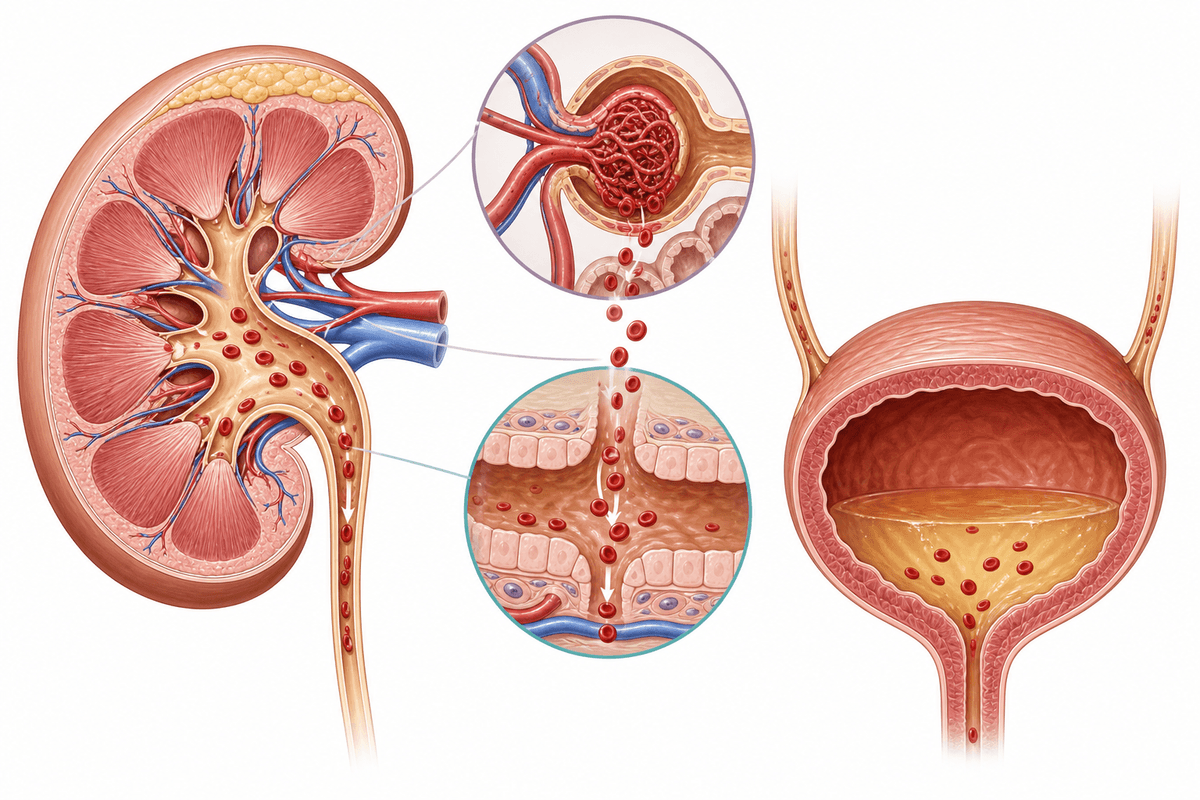
Hematuria, the presence of blood in urine, is a concerning symptom affecting many individuals in Bengaluru and requires prompt evaluation to identify underlying causes. This condition can range from microscopic traces visible only under laboratory examination to gross hematuria where urine appears visibly red or tea-colored. Dr Sriharsha Gurram provides comprehensive nephrology care for accurate diagnosis and targeted treatment of hematuria.
Blood cells present in urine that are only detectable through laboratory microscopic examination or urine dipstick testing, without visible color change to the naked eye.
Visible blood in urine causing red, pink, or cola-colored discoloration that is apparent without testing, often alarming to patients and indicating more significant bleeding.
Blood originating from kidney glomeruli, often accompanied by proteinuria and dysmorphic red blood cells, typically indicating intrinsic kidney disease requiring specialized nephrology evaluation.
Multiple factors can contribute to the development and progression of this condition.
Hematuria develops gradually. Recognising symptoms early gives you more treatment options.
From conservative to surgical — we always start with the least invasive option first.
A structured, patient-first approach from first visit to full recovery.
Dr Sriharsha Gurram begins with detailed history, physical examination, and urinalysis to characterize the hematuria pattern. Advanced imaging including ultrasound, CT urography, and laboratory tests including kidney function and urine cytology are ordered to identify the underlying cause systematically.
For suspected glomerular causes, Dr Gurram performs specialized testing including urine microscopy for red blood cell morphology, urine protein quantification, and serological markers for autoimmune kidney diseases. Kidney biopsy may be recommended when indicated for definitive diagnosis.
Dr Sriharsha Gurram collaborates with urologists, oncologists, and radiologists as needed to ensure comprehensive management. Referrals are made for cystoscopy, advanced imaging, or oncological evaluation when tumors or structural abnormalities are suspected beyond nephrology scope.
Based on diagnosis, Dr Gurram develops individualized treatment plans addressing the specific cause, whether medical management for kidney disease, coordination of urological procedures, or long-term monitoring for recurrent hematuria. Regular follow-up ensures resolution and early detection of complications.
What to expect at each phase of recovery.
Initial focus on controlling active bleeding, managing pain, treating infections with antibiotics, and ensuring adequate hydration. Most patients experience resolution of visible hematuria within days to weeks depending on the underlying cause and treatment initiated.
Recovery period varies based on intervention: medical management requires 1-4 weeks for infection resolution, endoscopic procedures need 1-2 weeks for healing, while surgical interventions may require 4-8 weeks. Temporary urinary symptoms like frequency or mild discomfort are common during this phase.
Regular follow-up with urinalysis, imaging, and nephrology assessment continues for 6-12 months or longer depending on the cause. Chronic kidney disease patients require ongoing care, while those with resolved infections or passed stones need surveillance for recurrence prevention.
Most patients with infection-related or stone-related hematuria achieve complete resolution with appropriate treatment, with no long-term kidney function impairment or recurrent bleeding when preventive measures are followed.
Patients with glomerular diseases or chronic kidney conditions achieve stable kidney function and minimal hematuria through ongoing medical management, regular monitoring, and lifestyle modifications under nephrologist supervision.
Prompt evaluation of hematuria enables early detection of urological malignancies when treatment is most effective, significantly improving survival rates and treatment outcomes compared to delayed diagnosis.
Timely intervention prevents progression of underlying kidney disease, preserves renal function, and reduces the risk of developing chronic kidney disease or requiring dialysis in the future.
Untreated hematuria can lead to severe complications depending on the underlying cause, including progression of kidney disease, development of anemia from chronic blood loss, or delayed diagnosis of potentially life-threatening conditions like kidney or bladder cancer. Infections may spread to kidneys causing pyelonephritis or sepsis, while obstructing kidney stones can result in hydronephrosis and permanent kidney damage.
Seek immediate medical attention if you notice any blood in your urine, whether visible to the eye or detected on routine testing, especially if accompanied by fever, severe pain, difficulty urinating, or blood clots. Do not dismiss even a single episode of hematuria as it may indicate serious underlying conditions requiring prompt evaluation. Consult Dr Sriharsha Gurram for comprehensive nephrology assessment and personalized treatment in Bengaluru.
Early treatment means more options and better outcomes. Book a consultation to understand your condition and explore the right path forward.
Consult Sriharsha Gurram for Hematuria at any of these 2 centres — pick the one nearest you.